Why do companies want your email address? What they use it for
By the YelMail team7 min read
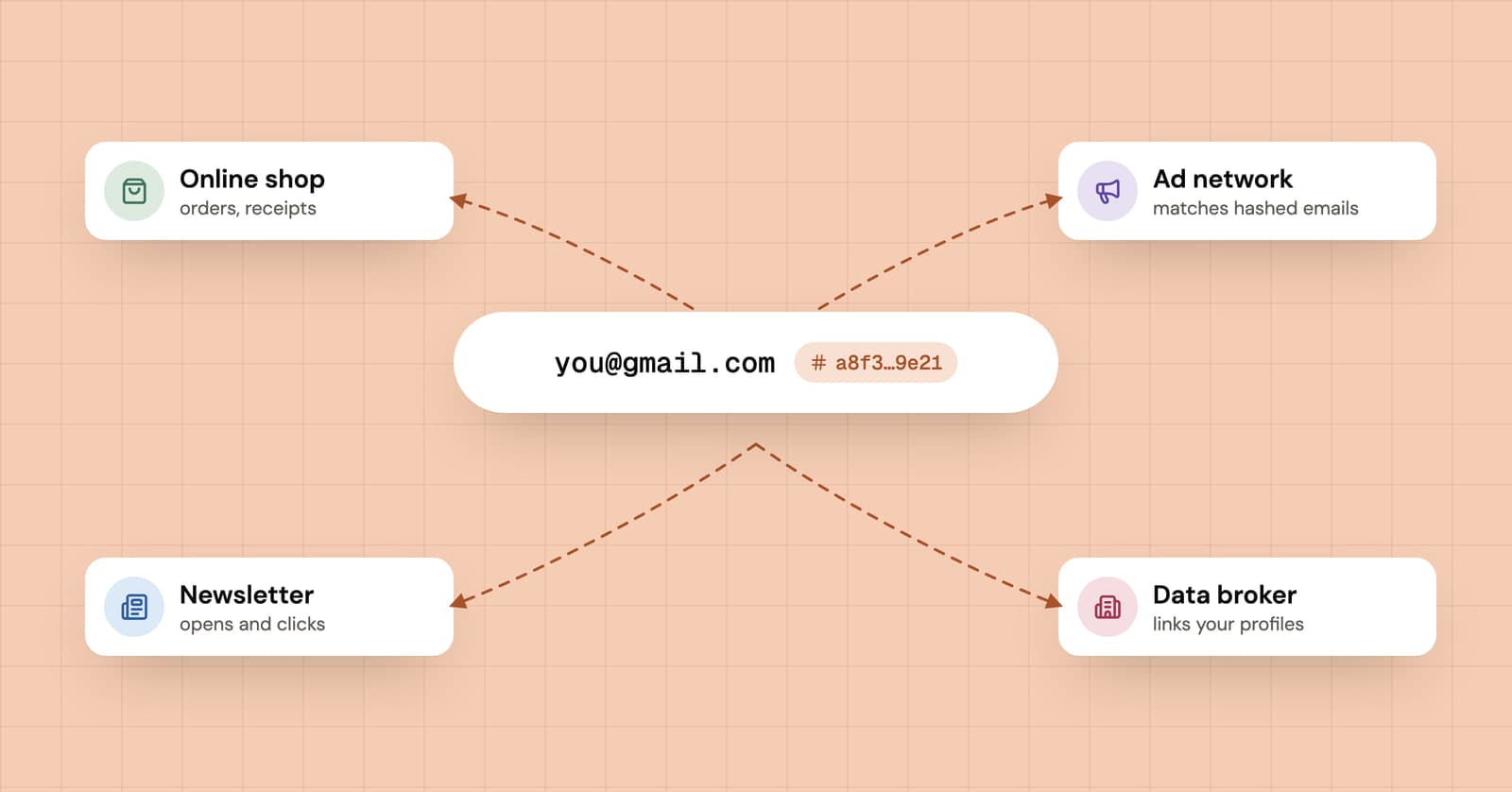
Companies want your email address because it's the one identifier you keep for years and type the same way everywhere. It lets them market to you at almost no cost, run and recover your account, keep out bots, and recognize you on other sites and ad networks, often by turning it into a hashed email. A throwaway address breaks most of that, including the parts that help you.
Why is your email address worth so much to a company?
Because it outlasts almost every other identifier. Cookies get cleared and phones get replaced, but most people keep the same email address for years, and every message sent to it lands in front of a real person for next to nothing.
Compare it with the other things a site could ask for. A cookie lives in one browser and disappears when you clear it. Your name isn't unique. A phone number is stable, but people guard it more closely and texting costs more than email. Your email address is unique and long-lived, and you type it exactly the same way on every site you use. For anyone trying to build a picture of a customer, that's the perfect key.
That's the real math behind the 10%-off pop-up. The discount is the price of your address, and the company expects to earn it back many times over.
What do companies actually do with your email?
They use it to market to you, to run your account, to filter out fake sign-ups, to measure how you respond, and to match you with ads elsewhere. Some also share it. A few of those uses help you. Most help them.
They send you marketing
An email list is a channel the company owns. No platform takes a cut per message and no algorithm decides who sees it. That's why a sign-up rarely ends at the welcome email: next come the discount reminders, the abandoned-cart nudges and the "we miss you" messages months later.
They run your account
Your address is your login, and it's where receipts, password resets, security alerts and legal notices go. This is the part that genuinely needs an address you'll still have next year. Nobody should be talked out of giving a real address to their bank.
They keep out bots and repeat sign-ups
One account per email address is the simplest rule a site can enforce, and a verification email proves a person is on the other end. It's also why some sites refuse known temp mail domains. From their side, a disposable address looks like a way around the one-account rule.
They measure how you respond
Marketing emails commonly carry tracking pixels and tracked links, so the company knows which messages you open and which links you click, tied to your address. How to tell if an email is being tracked shows how that works and how to block it.
They match you across sites
This is the part most people never see. Your address, usually in hashed form, lets a company find you on ad platforms and link you with data from other sources. The next section explains how.
Some share it
Privacy policies often mention sharing with "partners" or "service providers" in broad terms. What's allowed depends on where you live and what you agreed to, and the privacy policy's sharing section is the place to check before you sign up.
How does a hashed email follow you around?
A company runs your address through a one-way function such as SHA-256 and gets a fixed string of characters. The same address always gives the same string, so two companies holding your hash can see they have the same customer without swapping the address itself.
It sounds privacy-friendly, and that's how it's usually sold. In practice, a hash is a stable ID for you.
Two real systems show how the matching works.
Customer Match. Google's Customer Match lets advertisers use their "online and offline data" to reach customers across Search, the Shopping tab, Gmail, YouTube and Display. An advertiser uploads a file of customer information it has collected, and Google shows ads to the people in it who are Google users when they're signed in. The email you gave a shop can decide which ads follow you around YouTube.
Unified ID 2.0. UID2 is an advertising identity system built from email addresses and phone numbers. Its normalization rules say that before hashing, gmail.com addresses have their dots removed and everything from a plus sign to the @ stripped. So [email protected] and [email protected] end up as the same ID. If you were counting on plus addressing to keep you apart in ad systems, this is where it stops working.
The FTC's technology staff put it bluntly in a post titled No, hashing still doesn't make your data anonymous: a hashed identifier is still a persistent unique identifier that can be used to track people over time.
What changes when you give a throwaway address?
The marketing stops when the inbox expires, and any matching lands on an address that's tied to nothing else. You also lose the useful parts: receipts, password resets and security alerts go to an inbox that no longer exists.
| What they use it for | With your real address | With a throwaway |
|---|---|---|
| Marketing | Lands in your inbox until you unsubscribe | Stops when the inbox expires |
| Login and recovery | Works for years | Fails once the inbox is gone |
| One account per person | Accepted | Some sites refuse temp mail domains |
| Matching you across sites | Your hash links you to other data | The hash matches nothing else |
| Open and click tracking | Tied to you | Pixels blocked in YelMail, and nothing to tie them to |
| Sharing with partners | Your real address travels | A dead address travels |
What a throwaway doesn't change is everything else the site sees. It still gets your IP address, cookies and device details, and anything you type into its forms. Pay with a card, add a delivery address or sign in with Google, and the site knows who you are regardless of the email. Can temp mail be traced? goes through what stays visible.
Which address should you give?
Match the address to how long you want the relationship. Give your real address, or an alias you control, to anything you pay for, would need to recover or that carries legal weight. Give temp mail to one-offs.
- Banking, government, health, work and your main shopping accounts: your real address. Full stop.
- Accounts you'll keep but don't fully trust: an alias you can switch off later. Our comparison of temp mail vs email aliases covers the options.
- Sites where you want to know who leaked your address: plus addressing helps, but remember it shows your real address and, as the UID2 rules above show, it won't keep you apart in ad systems that normalize Gmail addresses.
- The discount code, the one download, the forum you'll read once: a temp address.
Frequently asked questions
Is it safe to give my email address to websites?
For reputable sites, mostly yes. Still, every site that holds your address is one more place it can leak from in a breach, and one more sender in your inbox. Use a unique password for each site, turn on two-factor authentication where you can, and give your main address only to accounts you would actually need to recover. The rest can get an alias or a temp address.
Can a company sell my email address?
It depends on where you live and what you agreed to. Laws such as the GDPR in Europe and state privacy laws in the US limit how personal data can be shared or sold, and many privacy policies describe sharing in broad terms. Read the sharing section before you sign up. If you want your data gone, you can often request deletion; here's how to remove your email from websites.
What can someone do with just my email address?
On its own, not much, but enough to be a nuisance. They can send you phishing, sign you up for spam, trigger password reset emails on your accounts, look your address up in old breach data, and learn which sites you use, since some sign-up forms say when an address is already registered. They still need your password or a code to get in, which is why two-factor authentication matters.
Why do stores ask for my email at the checkout counter?
For e-receipts and loyalty programs, and to connect what you buy in the shop with what they know about you online. Google's Customer Match, for example, lets advertisers use offline as well as online customer data to reach those customers with ads. If all you want is the receipt, a paper one keeps your address out of it.
Give it out on purpose
Your email address is the thread that ties your accounts together, so hand it out deliberately. Keep your real one for accounts you'd need to recover, use an alias for the ones you'll keep but don't trust, and give everything else a free temp inbox that expires on its own.
Keep reading
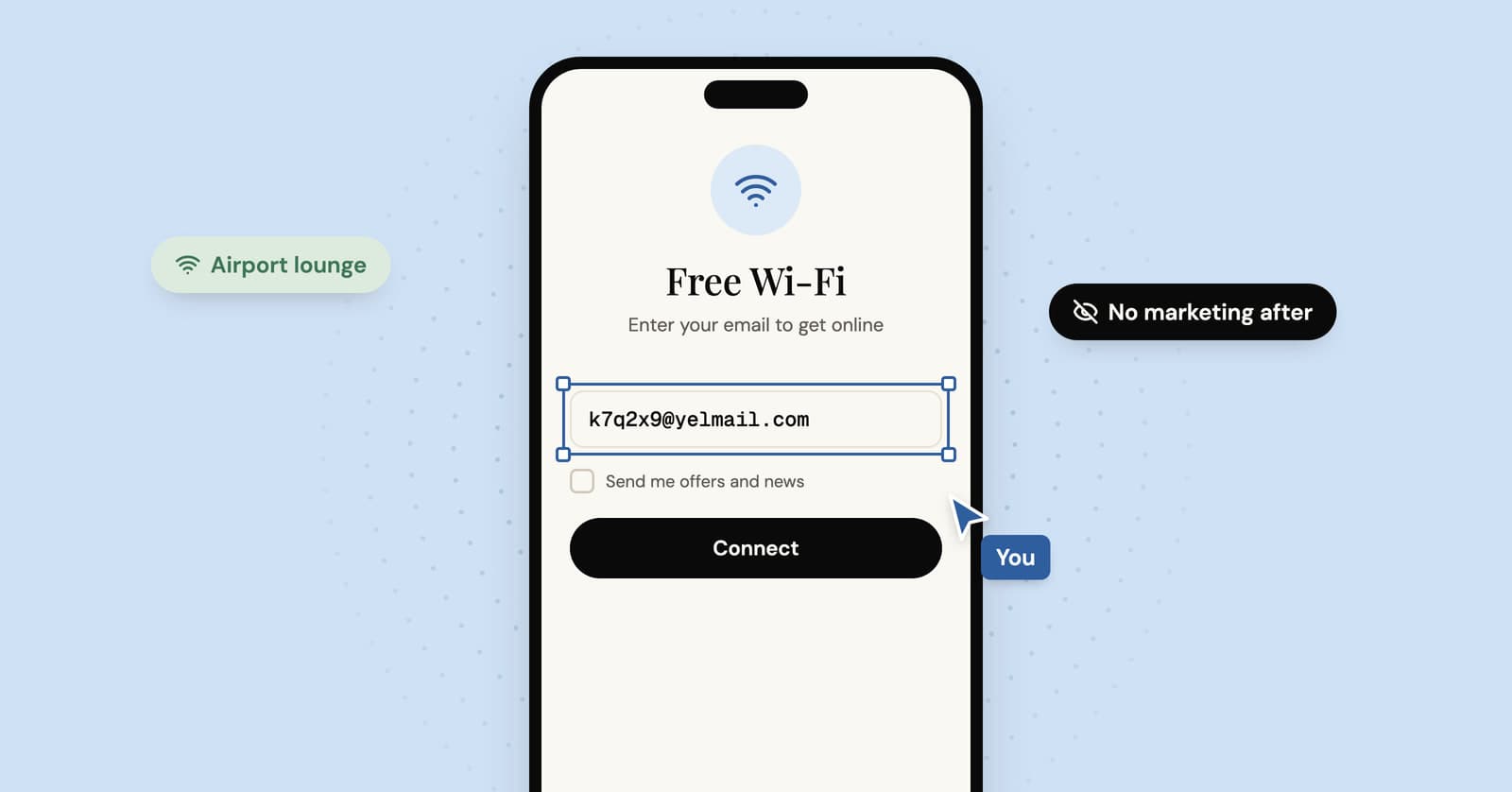
Public Wi-Fi login email: why they ask and what to give them
The café Wi-Fi page wants your email before it lets you online. Why it asks, where the address ends up, and what to type instead of your real one.
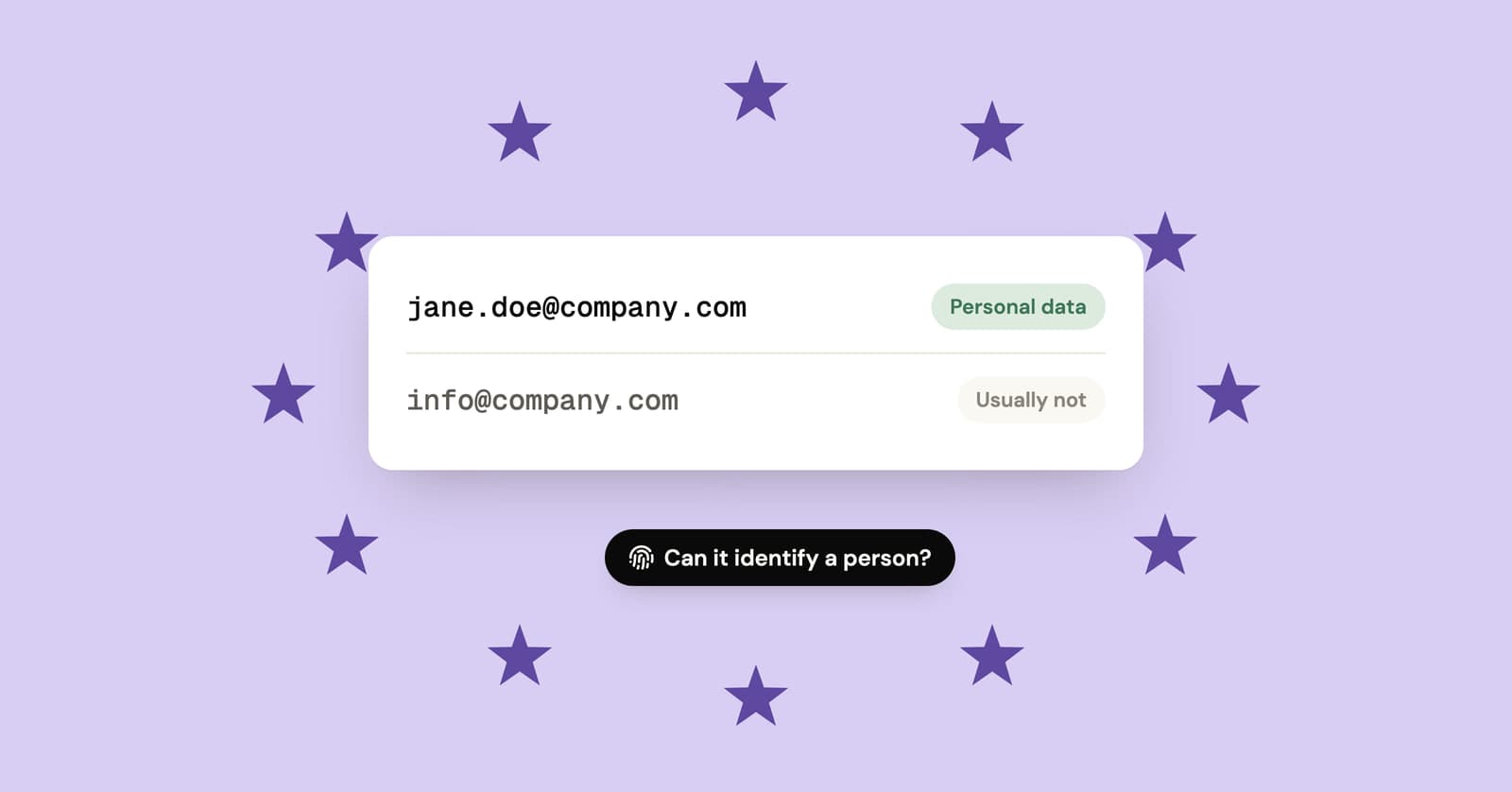
Is an email address personal data under GDPR?
Usually, yes. Named and work addresses count, shared role inboxes often don't, and random or hashed addresses are closer to personal data than most people assume.
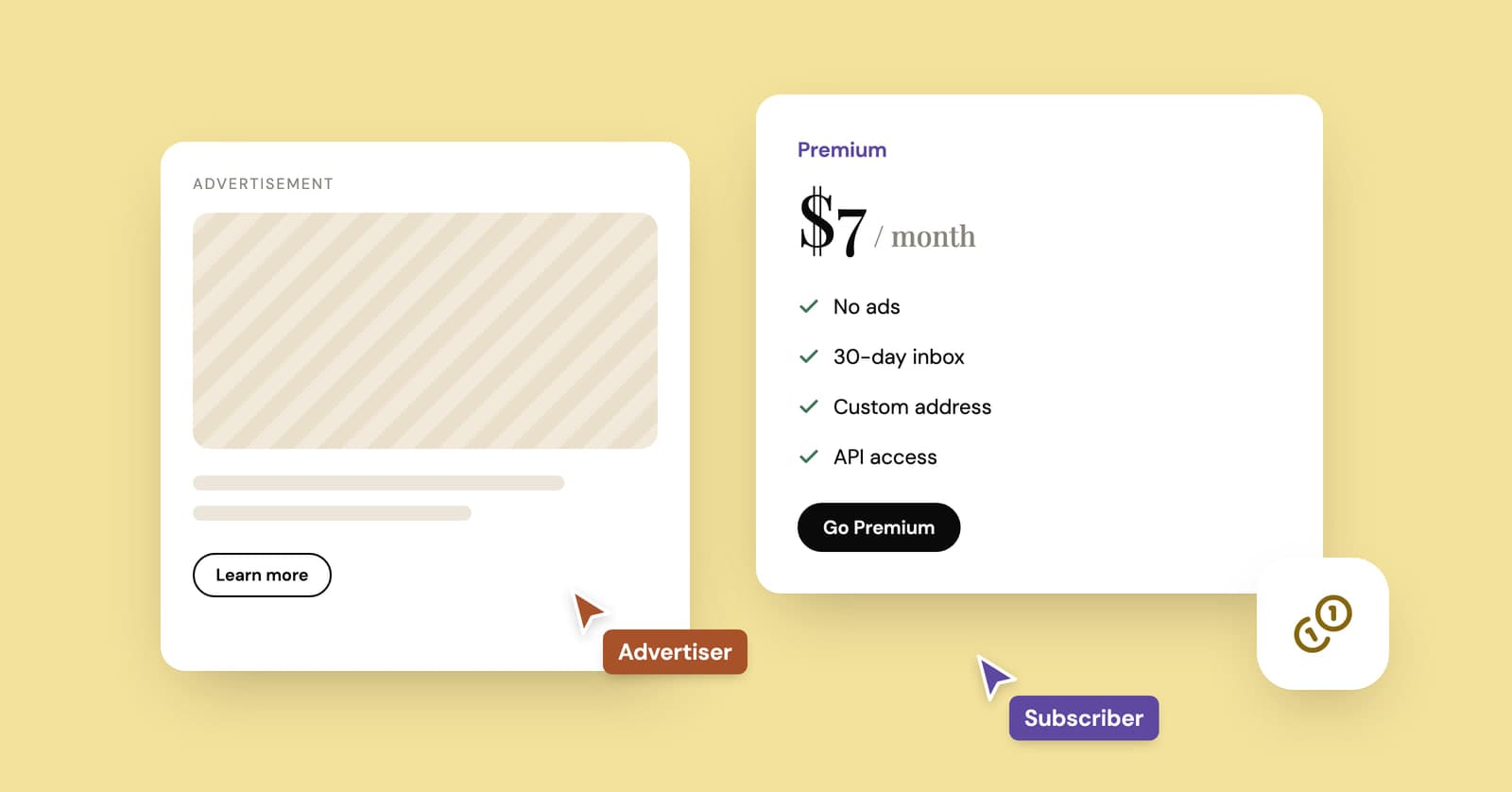
How do temp mail sites make money if they're free?
Ads, paid plans and developer APIs keep most temp mail services running. How the money works, what it costs and the signs a free inbox is paying its bills with your data.