Burner email for Craigslist, marketplaces and dating apps
By the YelMail team7 min read
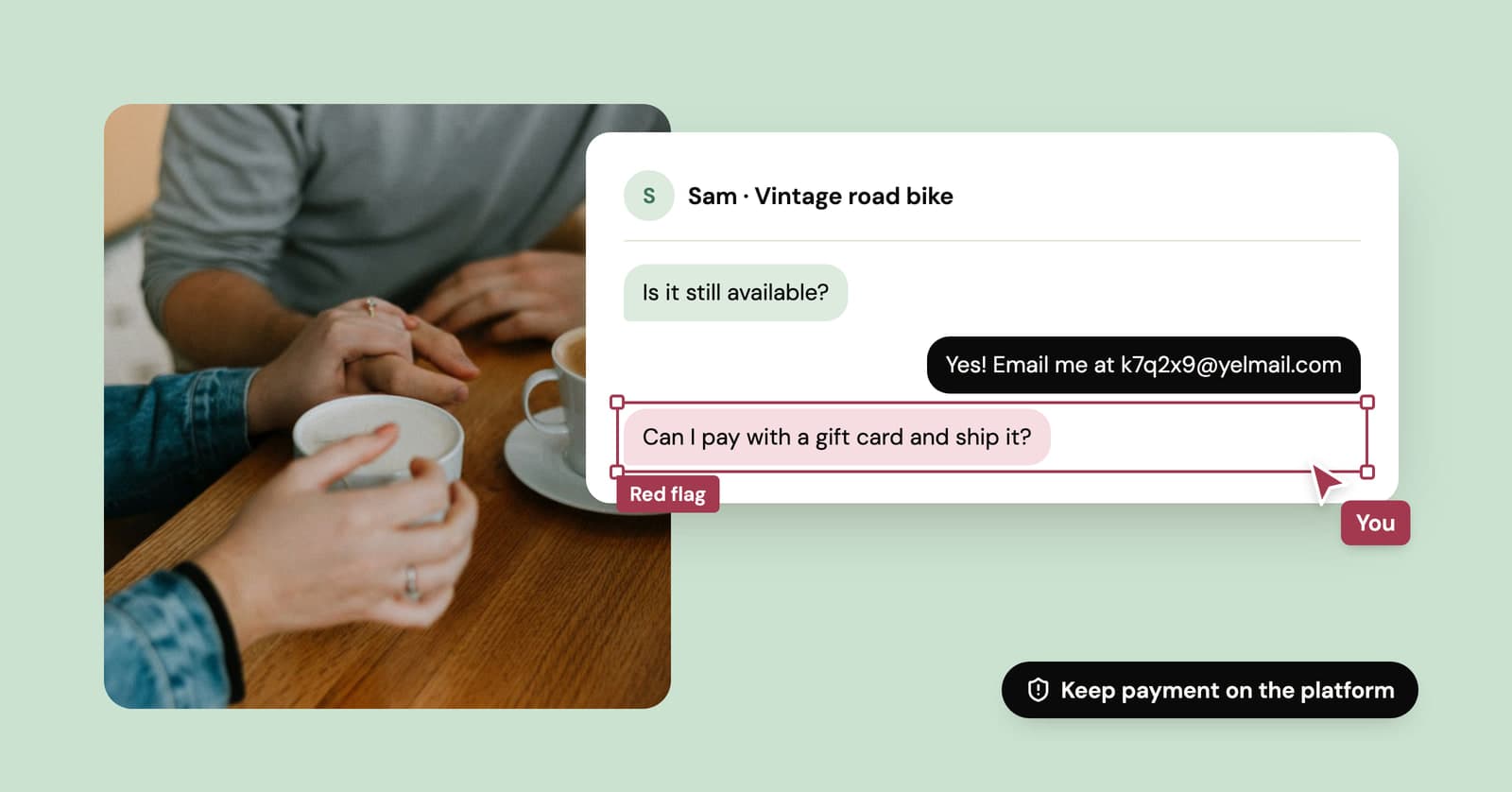
A burner email is a sensible buffer for Craigslist-style listings, online marketplaces and dating apps. It lets strangers reach you without getting the address tied to your name, your other accounts and your payment apps. Use it for sign-ups, listing links and first replies. A temp inbox is receive-only, though, so it suits first contact, not an ongoing conversation.
Why keep your main email away from strangers?
Your main address works like a lookup key. It often contains your name and doubles as the login for your other accounts. Once a stranger has it, you can't take it back.
A buyer who gets an email from firstname.lastname@ knows your full name before you've agreed on a price. Paste that address into a search engine and it may turn up your social profiles, your employer's website or an old forum post. It also becomes a target: a fake "payment received" email is far more convincing when it lands in the same inbox where your real payment apps send receipts. We cover the wider picture in why websites want your email.
A separate address breaks that chain. What a stranger gets is a random string that leads nowhere.
What a burner address can and can't do here
It handles anything where you only need to receive: account sign-ups, listing confirmations and the first messages from strangers. It can't send, so it won't carry a conversation.
What it's good for:
- Signing up to a classifieds or marketplace site you'll use once, to sell one sofa.
- Receiving the link many classifieds sites email you to publish, edit or delete your ad. Save that link somewhere safe. On the YelMail free plan, mail is kept for two hours, and your ad will probably run longer than that.
- Collecting first replies to an ad, so you can decide who's worth answering.
- Trying a dating app before you decide it deserves your real details.
What it can't do:
- Reply. YelMail is receive-only by design, so the service can't be used to send spam.
- Hold an account you'll keep. Dating profiles especially, as you'll see below.
For the replies themselves, an alias with reply support is the better tool. Our temp mail vs email alias comparison explains how the two differ.
Why the app's own chat is usually safer than email
On marketplaces and dating apps, the in-app chat is where the platform's blocking and reporting tools can actually help you. Getting you off it is one of the first things scammers try.
Three official sources say the same thing. Tinder's safety tips advise keeping conversations on Tinder while you get to know someone, and warn that people with bad intentions often try to move the conversation to text, messaging apps, email or phone right away. Facebook lists communicating with buyers or sellers privately outside Facebook and Messenger as a Marketplace scam warning sign. And the FTC's page on romance scams notes that scammers soon want to email, call or message you off the platform.
So a burner email is a buffer for the day you decide to move, on your schedule.
Marketplace scam red flags
Walk away if a buyer or seller does any of these. The list draws on the FTC's advice for people selling online and Facebook's Marketplace warnings.
- Insists on paying you through a payment app, or sends a screenshot "proving" they've paid.
- Says they paid twice by mistake and asks you to refund the extra.
- Offers a check for more than your price and asks you to send back the difference. The FTC's rule: never deposit a check for more than the selling price.
- Asks for a verification code "to prove you're real". The FTC flags this as a known scam: in the common version, the code lets them set up a Google Voice number linked to your phone number. Never share any code you didn't request yourself.
- Sends an email that looks like it's from Zelle, Venmo or another payment app saying money is waiting. Facebook specifically warns about these.
- Lists something far below market price, or wants a deposit to hold an item you haven't seen.
- Pushes you to hurry, or to move the chat somewhere else.
A burner inbox gives you a free test for that fake payment email. Your real payment apps send notices to the address on your payment account, and that address isn't your burner. So a "you've been paid" email that lands in the burner inbox didn't come from your payment app. Delete it.
Never move payment off the platform
If the site has its own checkout, use it. For local pickups, meet in a public place, see the item first and pay or get paid in cash. Don't wire money, buy gift cards, send crypto or use a payment app with a stranger.
Know what protection you actually have. Facebook's Purchase Protection covers eligible purchases made with its checkout; items exchanged in person with cash or person-to-person payment apps aren't eligible. So with cash, you inspect first and hand money over last. The FTC notes that many sites recommend selling to a local buyer you can meet in person and taking only cash.
Dating app red flags
Money is the whole game for romance scammers. The FTC's advice is flat: never send money or gifts to someone you haven't met in person.
The patterns it describes:
- They can't meet in person. They're traveling or living abroad, working on an oil rig, in the military or with an international organization.
- They ask for money for medical bills, a ticket to come and see you, a visa or fees to get them out of trouble. Some offer to help you get started in crypto "investing" instead.
- They tell you exactly how to pay: wire transfer, gift cards, a payment app or cryptocurrency.
- They push to move the chat off the app early.
Tinder adds the basics for meeting: don't share your home or work address or details of your daily routine, and meet somewhere public, never at a private location. Tell a friend where you'll be.
Dating apps: your account isn't a burner
A dating account is one you'll want back, so give it an address that lasts. Tinder's help center shows why: if your phone number changes, the email on the account is how you get back in.
Put a temp address there and a new phone number becomes a lost profile, and your matches and any subscription go with it. Use a lasting, separate address instead: an alias, or a saved YelMail Premium inbox with mail kept for 30 days and forwarding to a verified personal address (see pricing). If you signed up with a burner to try the app and you're staying, follow our guide to moving an account off temp mail now, while the inbox still works.
The same goes for your phone number. A second number keeps your real one private, but free temporary SMS numbers are shared and recycled, which makes them a poor fit for an account you care about. Our comparison of temp email and temp phone numbers explains the risk.
Frequently asked questions
Can I reply to a Craigslist buyer from a temp address?
Not from YelMail. Every address is receive-only, which stops the service being used to send spam. Read the message in your temp inbox, then answer through the site's own messaging if it has one, by phone or from an alias that supports replies. Replying from your main address hands over exactly what the burner was protecting.
Can a stranger find me from a burner email?
Not from a random address on its own. What identifies you is everything around it: your photos, your phone number, your first name, the neighborhood you mention. YelMail also blocks remote images and tracking pixels by default, so opening a stranger's email doesn't tell them when you read it or roughly where you were.
Should I give my burner email to a dating match?
Only if you've decided to leave the app's chat, and there's rarely a rush. The app is where blocking and reporting work. If you do move, a separate address beats your main one. But a temp inbox can't reply and expires quickly, so for an ongoing conversation an alias or a second mailbox suits better.
Is it safe to click links in emails from buyers?
Treat them with suspicion. Scammers send links to fake payment or shipping pages that ask for card numbers or logins. YelMail sanitizes email HTML and never runs scripts, which protects the inbox, but it can't make a phishing page safe once you open it. If a link claims to come from a payment app, open the app yourself instead.
Keep strangers at arm's length
Open a burner email for the sign-up and the listing, and keep conversations in the app until you have a reason to leave. If a dating profile turns into something you keep, switch its email before the temp inbox expires.
Keep reading
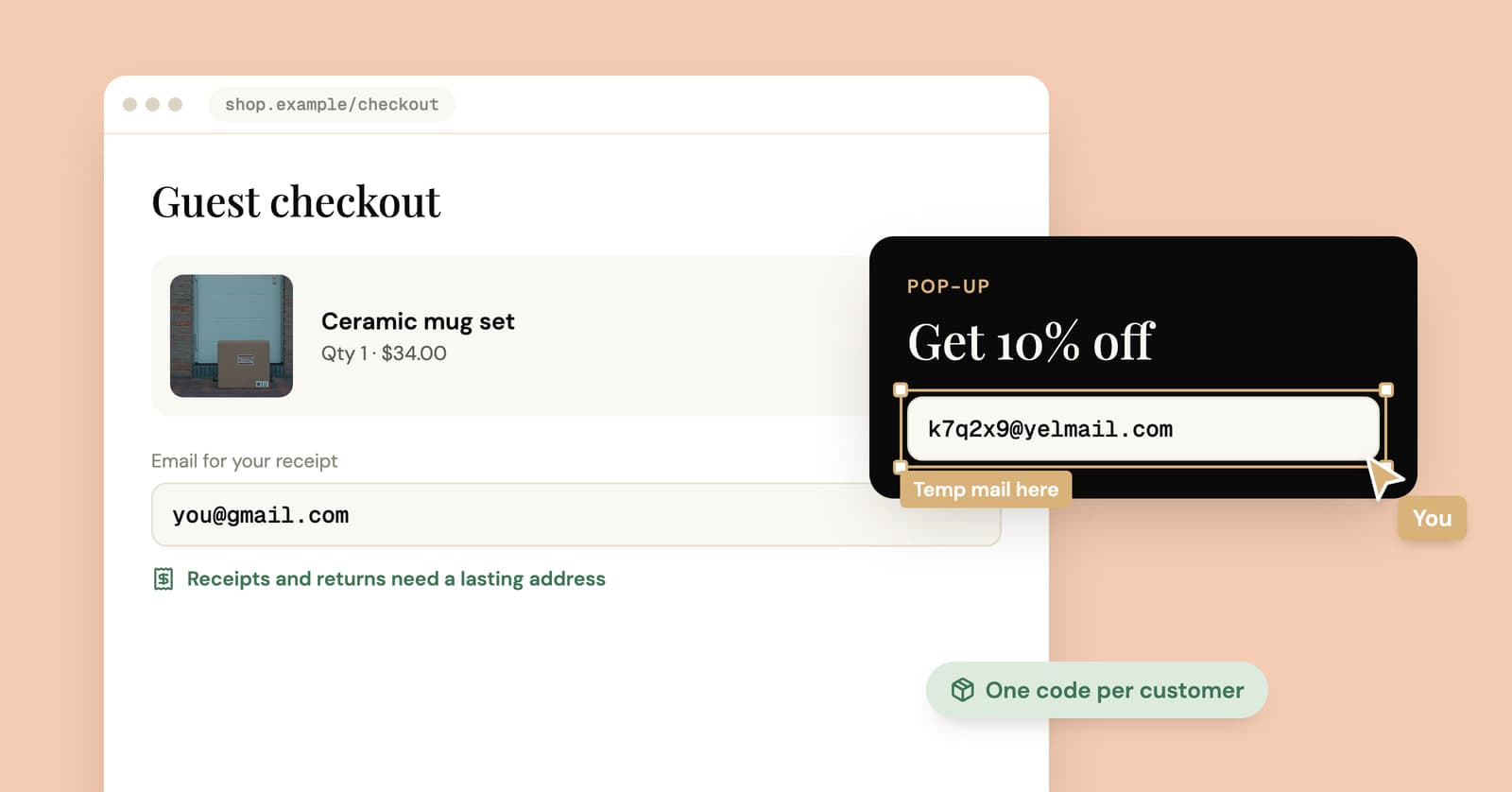
Disposable email for online shopping: where it helps and where it costs you
Use a throwaway address for the discount pop-up and the price alert. Use something that lasts for anything you might return, dispute or claim a warranty on.
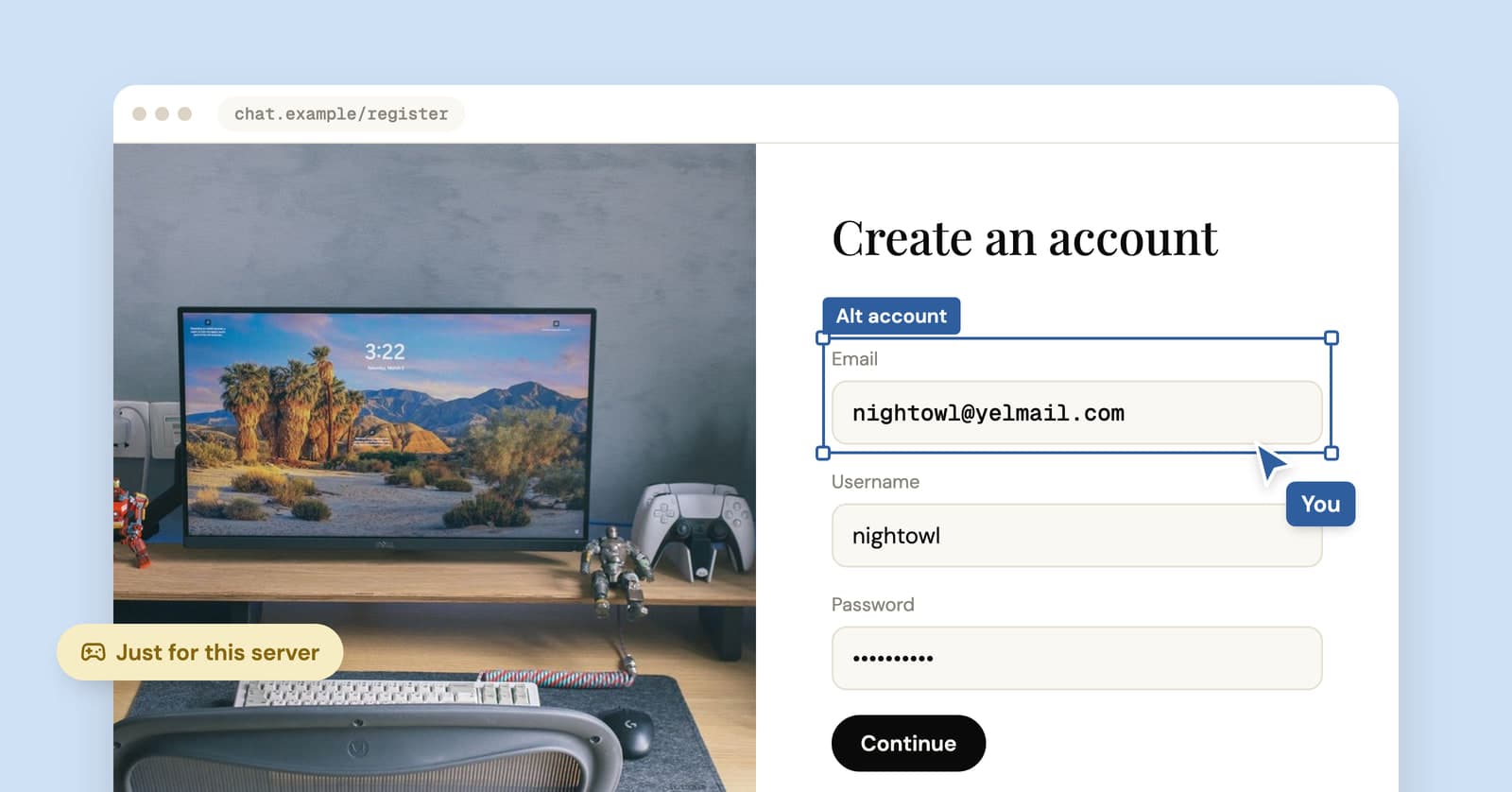
Temp mail for Discord: fine for an alt, risky for your main
A temp address gets you into Discord in a minute. Where that works, when Discord asks for a phone, and how to keep the account if you end up liking it.
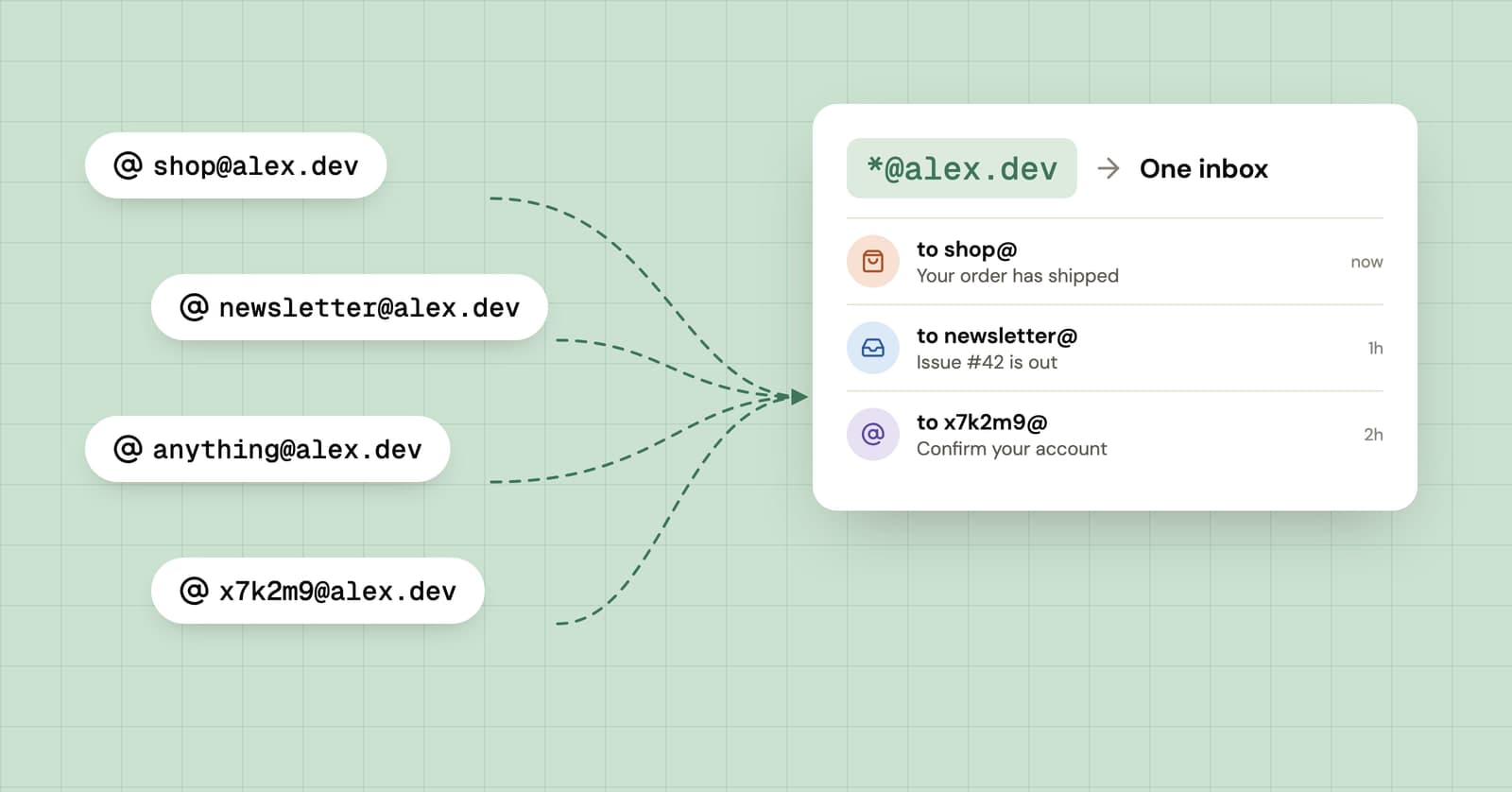
Catch-all email on your own domain: a different address for every site
Point your own domain at a catch-all and you can invent a new address for every sign-up on the spot. How it works, how to set it up, and what it costs you in spam.